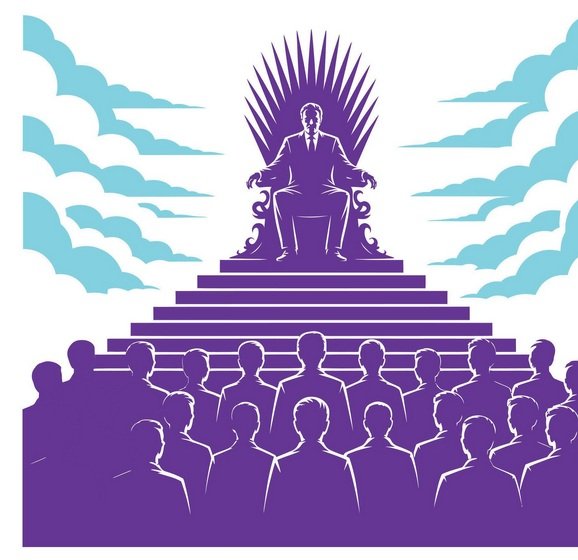
The Indian democratic experiment is often heralded as a modern miracle—a vibrant, chaotic, and massive exercise in universal suffrage. At the heart of this system lies the Indian Parliament, the supreme legislative body of the republic. However, as we have astutely pointed out, the relentless pursuit of an “extreme majority” by political parties raises a fundamental, chilling question: Does an overwhelming parliamentary majority actually threaten the very democratic fabric it is supposed to represent?
Before we dive deeply into the dark side of this systemic vulnerability, it is helpful to gently clarify a minor structural detail regarding our parliamentary setup. The Indian Parliament consists of the President and two houses: the Lok Sabha, which is actually the Lower House (House of the People), and the Rajya Sabha, which is the Upper House (Council of States). The Lok Sabha currently has 543 elected seats, meaning a political party or coalition requires a minimum of 272 seats to cross the halfway mark and form a stable government.
With that foundational clarity, the core argument remains undeniably sharp and historically vital. Over the last decade, we have witnessed a dramatic shift in the concentration of power. In 2014, the Bharatiya Janata Party (BJP) shattered decades of coalition politics by winning 282 seats, securing a clear, absolute majority on its own. In 2019, riding a massive wave of nationalism, the BJP increased its tally to a staggering 303 seats. In the 2024 general elections, while the BJP fell short of the absolute majority mark by securing 240 seats, it successfully formed the government relying on its National Democratic Alliance (NDA) partners.
Yet, as noted, the ambition never shrinks. The aggressive campaign slogan “Abki Baar, 400 Paar” (This time, crossing 400) revealed a deeply concerning psychology. On the surface, the desire to win maximum seats is a normal inclination in any competitive electoral democracy; every party wants a stable mandate. However, almost no one stops to critically analyze the draconian potential of such an overwhelming, unilateral mandate.
When a single party achieves an extreme majority, the traditional checks and balances of a parliamentary democracy—debate, dissent, committee scrutiny, and consensus-building—evaporate. The system subtly morphs from a representative democracy into an “elected autocracy.” Let us deeply examine how an extreme majority effectively hijacks the highest constitutional offices of the land, silences the opposition, and subverts the foundational ethos of the republic.
Monopolizing the Republic: The Capture of Constitutional Offices
The true danger of an extreme majority is not just that it allows a party to pass laws easily; it is that it gives the ruling party the mathematical power to single-handedly populate every crucial democratic institution with its own ideological loyalists.
1. The President and the Vice President: Rubber Stamps for the Regime?
Look at the election of the President of India, the highest constitutional office in the country. The President is not elected directly by the public but by an Electoral College consisting of the elected members of both houses of Parliament (MPs) and the elected members of the Legislative Assemblies of all States and Union Territories (MLAs).
When a ruling party holds an extreme majority in the Lok Sabha, commands significant numbers in the Rajya Sabha, and rules over a vast majority of the states, the election of the President becomes a mere formality. The ruling party dictates exactly who sits in the Rashtrapati Bhavan. Consequently, the President—who is supposed to act as the ultimate moral compass of the Constitution, capable of sending back flawed bills or questioning the executive—often becomes a compliant extension of the ruling government.
The Vice President, who is elected by the members of both houses of Parliament, falls into the exact same trap. Because the ruling party has the absolute luxury of numbers, they can easily install their preferred, beloved candidate. The Vice President also serves as the ex-officio Chairman of the Rajya Sabha. When the Chairman owes their position entirely to the ruling party’s extreme majority, managing the Upper House to suit the government’s agenda becomes a seamless, unhindered operation.
2. The Speaker of the Lok Sabha: The Death of Legislative Neutrality
The Speaker of the Lok Sabha is the supreme referee of the Lower House. By democratic tradition, once a member is elected as Speaker, they are expected to leave their partisan affiliations at the door and work for the entire house, ensuring that the opposition’s voice is heard, respected, and recorded.
However, because the Speaker is elected by a simple majority in the Lok Sabha, an extreme majority means the ruling party installs its own loyalist without needing any consensus or compensation from the opposition. As rightly pointed out, the opposition, fragmented and dwarfed by the ruling party’s numbers, has absolutely no chance of placing a neutral candidate in the Speaker’s chair.
We have seen the devastating consequences of this. An overwhelmingly powerful ruling party results in a deeply one-sided affair in Parliament. Microphones of opposition leaders are routinely muted. Crucial, economy-altering bills are passed via simple “voice votes” in the span of minutes, without any referral to standing committees. The most glaring reference to this abuse of power occurred during the Winter Session of 2023, where a staggering 146 opposition MPs were suspended from both houses. In their absence, the government passed massive, sweeping legislation, including the complete overhaul of India’s criminal justice system (the Bharatiya Nyaya Sanhita and others). This is not democracy; this is the tyranny of the majority.
3. Governors: The Federal Chokehold
India is a union of states, and its federal structure is a basic feature of the Constitution. However, the Governor of every state is appointed directly by the President on the advice of the central government. Therefore, the ruling party at the Center effectively appoints its own politicians, retired bureaucrats, or ideological mentors as Governors.
As noted structurally, the Governor sits structurally above the elected Chief Minister of the state. When the ruling party at the Center does not win a particular state, it simply uses the unelected Governor to put the brakes on the development and working of that state’s democratically elected government. We have witnessed unprecedented, hostile friction in non-BJP-ruled states like West Bengal, Kerala, Tamil Nadu, and Punjab. Governors have deliberately withheld assent to bills passed by state assemblies, refused to sign essential files, and continuously harassed Chief Ministers.
The elected Chief Minister becomes helpless, strangled by a representative of the Center. This fundamentally destroys the mandate of the state’s voters. When a single party rules the Center with an iron fist, federalism is replaced by centralized imperialism.
4. The Election Commission and the Referees of Democracy
Here, a fantastic and deeply relevant point regarding the appointment of the Chief Justice of India (CJI) and three-member committees. To ground this in exact constitutional facts: while the CJI is traditionally appointed based on seniority and the Supreme Court judges are selected by a “Collegium” of senior judges (which the government has frequently tried to bypass or delay), our anxiety about the three-member committee perfectly describes the recent, highly controversial takeover of the Election Commission of India (ECI).
Historically, the Election Commission was expected to be fiercely independent. However, recently, the ruling party used its extreme majority to pass the Chief Election Commissioner and Other Election Commissioners (Appointment, Conditions of Service and Term of Office) Act. This law created a three-member selection committee consisting of:
- The Prime Minister
- A Union Cabinet Minister (nominated by the PM)
- The Leader of the Opposition
Exactly as reasoned, this means the ruling party automatically has 2 votes, while the opposition has 1 vote. It makes absolutely no sense, as the government can outvote the opposition every single time to install their preferred election referees. How can we expect a fair election when the umpires are handpicked exclusively by the captain of the dominant team? This systematic capture ensures that the individuals in high-power dignitary roles belong to, or are deeply sympathetic to, the ruling regime. They will invariably work to protect the ruling party. How can they be expected to show the spine to oppose any unconstitutional rule or amendment passed by their political benefactors?
Legislative Bulldozing: The Electoral Bond Saga
When a ruling party commands an extreme majority, the parliament ceases to be a forum for debate and becomes a mere notice board for the government’s decisions. They can pass absolutely any bill, repeal any law, and push through any constitutional amendment at their own will, without any restriction or fear of defeat.
A recent reference to the Electoral Bond Scheme is the perfect, undeniable example of this phenomenon. Introduced in 2017 through a controversial Money Bill route (to bypass the Rajya Sabha, where the government initially lacked a massive majority), the Electoral Bond scheme was designed to allow infinite, completely anonymous corporate donations to political parties.
What did this mean in practice? It meant the system was made legally functional just to benefit the ruling party, effectively institutionalizing opacity in political funding. Because the ruling party controlled the State Bank of India (which issued the bonds) and the investigative agencies (ED, CBI, IT), they had a monopoly on political wealth. The scheme was specifically engineered to make the ruling party richer than ever before, creating an incredibly skewed playing field. The massive accumulation of wealth allowed them to outspend opponents in every election, engineer defections in opposition-ruled states (often termed “Operation Lotus”), and ensure they stayed in power perpetually.
It was only after years of relentless legal battles by civil society that the Supreme Court of India finally struck down the Electoral Bond scheme in early 2024, declaring it fundamentally “unconstitutional” and a violation of the voters’ right to information. The data released subsequently proved our point exactly: the ruling party was the overwhelming beneficiary of this legalized, asymmetric political funding.
This proves that when a party has an extreme majority, they will pass bills/amendments not for public welfare, but to consolidate their own financial and electoral supremacy.
“One Party, One Rule, One Ruler”: The Descent into Elected Autocracy
The ultimate, unhidden ambition of the current political machinery has been deeply concerning. The repeated clarion calls for a “Congress Mukt Bharat” (An India free of the Congress party) or an “Opposition-free India” are not just political rhetoric; it is an ideological agenda. The goal is clear: only one party should rule the nation, and it should rule forever.
When a party dreams of “One Nation, One Election, One Party, One Ruler,” they are walking dangerously in the footsteps of autocratic regimes. As already pointed out, when a state is ruled by a single entity without any robust opposition, the democratic structure becomes merely ornamental. It begins to resemble the managed democracies or outright autocracies of nations like Russia, where elections are held, but the results are predetermined because the opposition has been financially, legally, and socially decimated.
Should we stop calling ourselves a democracy then? It is a painful question. We are currently navigating a twilight zone—an “electoral autocracy” where the ritual of voting exists, but the playing field is entirely uneven, and the institutions designed to protect the citizen have been hollowed out.
The Collapse of Political Decency and Public Discourse
In a healthy, mature democracy—whether in European nations or historically in our own country—opponents are treated as political rivals, not as enemies of the state. Their words are respected, their critiques are taken constructively, and debates are centered around policy, economics, and public welfare.
But look at the state of our political discourse today. Intoxicated by extreme majority and unchecked power, our politicians have descended into making vulgar, deeply personal remarks about each other, dragging families, deceased ancestors, and private lives into the mud. The ruling machinery frequently labels dissenting citizens, protesting farmers, questioning students, and opposition leaders as “anti-nationals,” “urban naxals,” or “traitors.”
When the ruling elite is entirely consumed by the arrogance of numbers and spends its energy delivering hateful rhetoric, how can they genuinely think of the public’s actual needs? Real issues—like devastating youth unemployment, staggering inflation, dying MSMEs, and a crumbling public healthcare system—are conveniently buried under the deafening noise of religious polarization and hyper-nationalism.
The Intimidation of the Bureaucracy and the Free Press
A democracy survives not just on politicians, but on the steel frame of its bureaucracy, its investigative agencies, and its journalists. However, under an extreme majority, this ecosystem is thoroughly compromised.
Currently, it feels nearly impossible to raise a voice against any wrongdoing or undemocratic bill because the institutions of accountability have been hijacked. The Enforcement Directorate (ED), the Central Bureau of Investigation (CBI), and the Income Tax department are frequently weaponized, acting almost as frontal organizations for the ruling party. They are unleashed upon opposition leaders, critical journalists, and independent NGOs just before elections, forcing them into submission or jail without trial under draconian laws like the PMLA or UAPA.
As a result, the vast majority of government officers operate under a cloud of fear or willful compliance, working under the exact same political influence. As we bravely stated, there is barely 1-2% of officers, independent journalists, and opposition leaders left who still show a spine. And those few who dare to question the supreme leader or the ruling party are immediately placed under intense threat, surveillance, or legal harassment.
Reclaiming the Republic: Designing a System That Justifies Democracy
The current trajectory—where the election of the President, Vice President, Lok Sabha Speaker, State Governors, and Election Commissioners is dictated solely by the whims of a single party—is demonstrably dangerous for the people of India and fatal to the concept of a balanced democracy.
To prevent the Indian Republic from devolving permanently into a one-party dictatorship, we must urgently devise and demand systemic, constitutional reforms that justify democratic rights rather than dictate to the country.
What would a healthy, spine-restored democracy look like?
- Bipartisan Consensus for High Offices: The selection of referees—such as the Chief Election Commissioner, the Director of the CBI, and the heads of the ED—must require a supermajority (e.g., a two-thirds vote in parliament) or absolute consensus in a committee where the government does not have an automatic numerical advantage. The opposition and the judiciary must have an equal say to ensure neutrality.
- Depoliticizing the Speaker and Governors: Once elected, the Speaker should legally be required to resign from their political party to ensure absolute neutrality, a practice followed in the UK Parliament. Similarly, the appointment of Governors should require the consultation and consent of the respective State’s Chief Minister, ensuring that the Center cannot weaponize the Raj Bhavan.
- Protecting the Judiciary: The Supreme Court must remain the ultimate, uncompromised guardian of the Constitution. The government’s attempts to delay judicial appointments or dictate collegium choices must be fiercely resisted by the legal fraternity and the public.
- Financial Transparency: We must demand absolute transparency in political funding. The striking down of the Electoral Bonds was a victory, but the fight for state-funded elections or strictly capped, highly visible corporate donations must continue to ensure that extreme wealth cannot buy extreme majorities.
Democracy is not just about holding an election every five years; it is about what happens in the 1,825 days between those elections. It is about the right to dissent, the right to equal justice, and the guarantee that no single entity—no matter how popular—can rewrite the rules of the game to ensure they never lose.
An extreme majority is a seductive poison. It promises efficiency and stability, but it ultimately delivers authoritarianism. If the people of India do not recognize the danger of handing absolute, unchecked power to any one party, one rule, and one ruler, we will wake up one day to find that the world’s largest democracy has been quietly legislated out of existence.
 Views Today : 51
 Views Yesterday : 24
 Total views : 903
Leave a Reply