
Democracy is often celebrated as the highest form of governance, a system in which people rule themselves through elected representatives. Elections are portrayed as festivals of democracy, moments when citizens exercise their power, shape their future, and hold leaders accountable. In theory, democracy empowers the people. In practice, however, many modern democracies—particularly in developing nations—have drifted into a troubling contradiction: electoral autocracy forced upon citizens in the name of choice.
In such a system, people are repeatedly told that they are free, yet their freedom is limited to selecting between deeply flawed options. The act of voting becomes less about hope and more about damage control. Citizens participate not because they believe in meaningful change, but because they fear the consequences of not participating. Democracy survives as a ritual, while its spirit slowly erodes.
India remains a constitutional democracy in form, with regular elections, a multi-party system, and institutions like the judiciary and parliament still functioning, albeit under strain. However, numerous international assessments and analyses from 2025 classify it as a “flawed democracy” (per The Economist Democracy Index) or an “electoral autocracy” (per the Varieties of Democracy Institute, or V-Dem, for the ninth consecutive year as of September 2025). Freedom House rated India as “partly free” in its 2025 report, citing constraints on personal expression, media freedom, and civil liberties, often through colonial-era laws like sedition statutes. These classifications reflect a consensus on democratic backsliding, but not a complete collapse into outright autocracy—India still holds competitive elections, as seen in the 2024 national polls, where the ruling Bharatiya Janata Party (BJP) lost its outright majority and had to form a coalition government
The Promise of Democracy and the Reality of Betrayal
In a true democracy, people elect a government that represents their interests, addresses their problems, and works for their welfare. Every election cycle rekindles hope among citizens. They believe that this time, perhaps, the newly elected leaders will be different—more honest, more accountable, more humane. Campaign speeches are filled with promises of development, justice, employment, equality, and transparency. Politicians describe themselves as public servants, claiming they exist to serve the people.
Yet history repeatedly shows that this promise rarely survives beyond election day.
Once elections are over and power is secured, the so-called public servants transform into unquestionable rulers. Accountability fades, arrogance grows, and governance shifts from service to control. The people who once stood at the center of political speeches become irrelevant spectators for the next five years. Democracy, which should be a continuous process of participation, becomes a once-in-five-years formality.
Once elected, those who assume power often begin to behave as if they are the owners of the country, while the very people who elected them are rendered powerless for the next five years. Public welfare gradually disappears from the political agenda, and citizens are forced to take to the streets to demand even their basic rights. However, instead of being heard, protesting voices are frequently met with repression. Peaceful demonstrators are labeled as anti-national, charged under stringent laws such as sedition, and imprisoned for extended periods without timely trials. Their families are subjected to harassment, social intimidation, and economic pressure, while multiple legal cases are filed to silence dissent permanently. In this environment, fear replaces democratic dialogue, and questioning authority becomes a punishable act. This reality reflects a troubling transformation of governance, where democratic participation is reduced to a single electoral event, and post-election accountability vanishes—an experience many now describe as the defining feature of the “new India.”
Elections Without Real Choice
One of the most disturbing features of modern electoral politics is the absence of genuine choice. Citizens are forced to choose among candidates who often have criminal backgrounds, corruption charges, or histories of violence. Political parties openly grant tickets to individuals accused—or even convicted—of serious crimes such as murder, extortion, rape, and financial fraud.
The logic is brutally simple: candidates with money, muscle power, or notoriety are more likely to win. Whether they are feared or admired does not matter. What matters is their ability to mobilize resources and influence voters.
As a result, voters are left with a grim dilemma:
Choose the “less criminal” candidate over the “more criminal” one.
This is not a democratic choice; it is coercion disguised as freedom. When every option is morally compromised, the act of voting loses its ethical meaning. Citizens are forced to legitimize a broken system by participating in it.
NOTA: A Symbol Without Power
To address voter dissatisfaction, the option of NOTA (None of the Above) was introduced. In principle, NOTA was meant to empower citizens who reject all candidates. In practice, it is nothing more than a symbolic gesture.
NOTA carries no real consequence. Even if a majority of voters choose NOTA, the candidate with the highest votes still wins. Political parties do not feel threatened, candidates do not feel rejected, and the system does not reform itself. NOTA allows citizens to express frustration, but it does not translate that frustration into change.
A truly people-centric democracy would ask deeper questions:
- Why do citizens reject all candidates?
- What reforms are needed to restore trust?
- How can political parties be held accountable for poor candidate selection?
Instead, NOTA exists as a pressure-release valve—allowing people to vent without altering power structures.
From Voters to Spectators
Perhaps the most dangerous aspect of this system is what happens after elections. Once votes are cast, citizens lose all meaningful influence. Governance becomes centralized, opaque, and unresponsive. Public participation disappears, and dissent is increasingly discouraged.
People who question authority are often labeled as anti-national, disruptive, or dangerous. Activists, journalists, and ordinary citizens who raise uncomfortable questions may face harassment, arrest, or worse. Fear replaces dialogue. Silence becomes survival.
In this environment, democracy ceases to be participatory. Citizens are reduced to spectators watching decisions that shape their lives without their consent or involvement.
Five-Year Rule and Colonial Parallels
Elected governments often behave as if winning an election grants them unchecked authority for five years. During this period, laws are passed without consultation, institutions are weakened, and dissent is crushed. The government becomes both judge and enforcer.
This style of governance bears an unsettling resemblance to colonial rule.
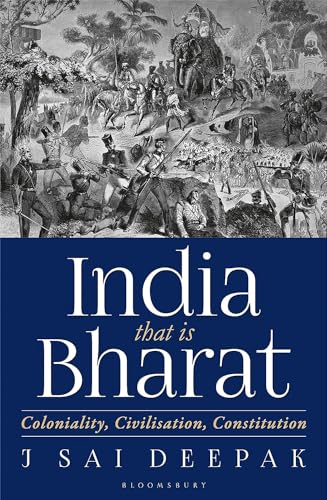
During the British colonial era, laws were imposed without public consent. Citizens had no voice and no power. Today, the situation appears eerily similar, with one key difference: the rulers are no longer foreigners. They are our own people—our brothers and sisters—governing with the same arrogance and detachment.
The mindset remains colonial; only the faces have changed.
Luxury for Leaders, Struggle for Citizens
While political elites enjoy luxury lifestyles—multiple residences, security convoys, privileges, and exemptions—the common citizen struggles with unemployment, inflation, inadequate healthcare, and poor education. Economic inequality widens, yet leaders speak of national pride and progress.
The contradiction is stark:
- Leaders grow richer.
- Institutions grow weaker.
- Citizens grow poorer.
The promise of democracy was equality and dignity. The reality is privilege and exclusion.
Criminalization of Politics and Moral Decay
When criminality becomes normalized in politics, society absorbs the message that ethics are optional. Young people learn that power does not come from integrity or competence, but from money and force. Merit is replaced by loyalty, and justice becomes selective.
Over time, this moral decay spreads beyond politics into everyday life. Corruption becomes acceptable, dishonesty becomes survival, and silence becomes wisdom. Democracy, instead of elevating society, begins to corrode it from within.
Freedom Without Rights
A democracy without civil liberties is a contradiction. Yet increasingly, fundamental rights—freedom of speech, expression, protest, and privacy—are restricted under the pretext of security, stability, or nationalism.
Citizens are told they are free, but they are afraid to speak. They are told they have rights, but they are punished for exercising them. This creates a society that looks democratic on paper but functions autocratically in reality.
Such a system is best described as electoral autocracy—where elections exist, but real power remains concentrated and unaccountable.
Why the System Persists
If the system is so deeply flawed, why does it continue?
The answer lies in collective resignation. Many citizens believe nothing can change. Others are divided along lines of religion, caste, language, or ideology, preventing unified resistance. Some benefit from the system and therefore defend it. Others are too exhausted by daily survival to engage politically.
This resignation is precisely what sustains electoral autocracy.
Democracy as an Illusion
What we are left with is the illusion of democracy. Voting exists, but choice does not. Institutions exist, but independence does not. Rights exist, but protection does not.
Citizens are repeatedly told they are sovereign, yet treated as subjects. Democracy becomes a label rather than a lived reality.
The Need for Structural Change
True democracy requires more than elections. It demands:
- Internal democracy within political parties
- Disqualification of candidates with serious criminal charges
- Meaningful power to citizens between elections
- Strengthening of independent institutions
- Protection of dissent and free speech
- Accountability mechanisms that actually work
Without these reforms, elections will continue to legitimize authoritarian behavior rather than prevent it.
Conclusion: Changing Rulers Is Not Enough
India—and many other democracies—stand at a crossroads. The danger is not dictatorship by force, but authoritarianism by consent. When people are forced to choose between bad options, democracy becomes a trap rather than a safeguard.
We have changed rulers, but not the system. Until the system changes, citizens will continue to be fooled into believing they are free while living under controlled governance.
Democracy must be reclaimed—not as a ritual, but as a right. Not as an event, but as a continuous process. Otherwise, electoral autocracy will continue to masquerade as people’s rule, and freedom will remain an illusion wrapped in the language of choice.

 Views Today : 24
 Views Yesterday : 71
 Total views : 852
Leave a Reply