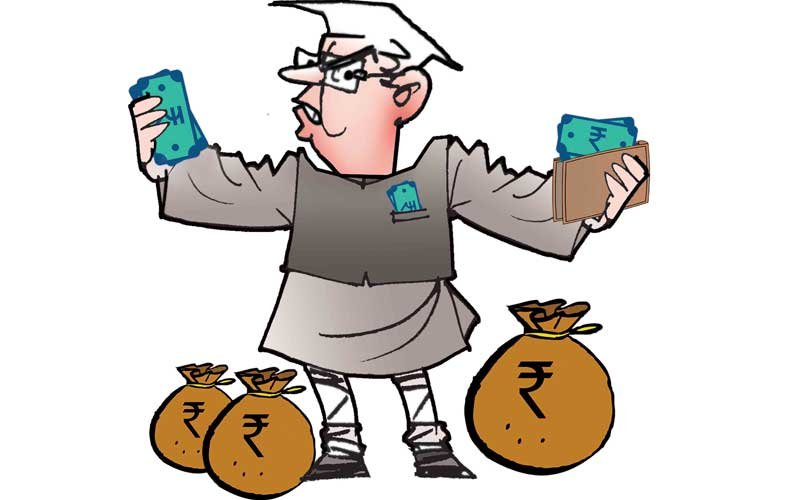
Grok replied, shocked: Whether they are our servants or we are working for them!!!
Yes, many Indian MLAs become crorepatis, and data suggest that winning an MLA election often correlates with significant wealth accumulation. According to reports from the Association for Democratic Reforms (ADR) and other sources:
- High Percentage of Crorepati MLAs: In recent state elections, a significant proportion of elected MLAs are crorepatis. For instance:
- In Haryana’s 2024 assembly elections, 96% of MLAs (86 out of 90) were crorepatis, with average assets of ₹24.97 crore, up from ₹18.29 crore in 2019.
- In Madhya Pradesh’s 2023 elections, 89% of MLAs (205 out of 230) were crorepatis, with average assets of ₹11.7 crore.
- In Odisha’s 2024 elections, 73% of MLAs (107 out of 147) were crorepatis, with average assets of ₹7.37 crore.
- In Delhi, the average declared net worth of MLAs is reportedly around ₹40 crore.
- Wealth Growth Post-Election: Re-elected MLAs often show substantial asset growth. For example:
- In Haryana, 30 re-elected MLAs in 2024 saw their average assets rise by 59% from ₹9.08 crore in 2019 to ₹14.46 crore.
- In Madhya Pradesh, the number of crorepati MLAs increased from 187 in 2018 to 205 in 2023, with average assets rising from ₹10.17 crore to ₹11.7 crore.
- Nationally, re-elected MPs in the 2024 Lok Sabha elections saw asset increases, with some doubling their wealth since 2019.
- Pre-Election Wealth: Many MLAs are already wealthy before entering politics, often due to business ventures or inherited wealth. For example, a 2012 Times of India report noted that Goan MLAs often enter politics after succeeding in business, and their wealth multiplies post-election. However, the data also suggests that political office itself can accelerate wealth accumulation, raising questions about the sources of this growth.



Sources of Income for MLAs
MLAs’ wealth comes from a combination of their official salaries, allowances, business interests, and, in some cases, questionable or undeclared sources. Here’s a breakdown:
- Official Salaries and Allowances:
- Base Salary: MLA salaries vary by state. For example:
- In Uttar Pradesh, as of August 2025, MLAs earn ₹35,000 per month (increased from ₹25,000), while ministers earn ₹50,000 (up from ₹40,000).
- In Delhi, MLAs reportedly earn around ₹2.1 lakh per month, including salary and allowances, making them among the highest-paid in India.
- In other states like Madhya Pradesh or Haryana, salaries are lower, typically ranging from ₹1 lakh to ₹1.5 lakh per month, including allowances.
- Allowances: MLAs receive various allowances, such as:
- Constituency Allowance: For example, ₹75,000 per month in Uttar Pradesh (up from ₹50,000).
- Travel Allowances: For official duties, often covering fuel, vehicles, or air travel.
- Office and Staff Allowances: To hire aides or maintain offices.
- Telephone and Internet Allowances: To cover communication expenses.
- Housing and Other Perks: Free or subsidized accommodation, medical benefits, and sometimes perks like free iPhones (e.g., Delhi MLAs reportedly received iPhone 16 Pros).
- Pensions: Former MLAs receive lifelong pensions, which can accumulate significantly for those serving multiple terms. While these official earnings are substantial, they alone are unlikely to account for crore-level wealth within a single term (5 years). For instance, even at ₹2.1 lakh per month in Delhi, an MLA would earn around ₹1.26 crore over 5 years before taxes, which is significant but not enough to explain the assets of top crorepatis (e.g., ₹296 crore for a BJP MLA in Madhya Pradesh).
- Business and Investments:
- Many MLAs own or are involved in businesses, such as real estate, mining, manufacturing, or hospitality. For example:
- A 2012 report noted that Goan MLAs’ businesses often “flourish” while they are in office, despite their time being occupied by politics, suggesting potential leveraging of political influence.
- Asset declarations often include investments in real estate, stocks, or other ventures, which grow significantly during their tenure. For instance, re-elected MLAs in Odisha saw nearly 100% asset growth from 2019 to 2024.
- Other Income Sources:
- Agricultural Income: Many MLAs declare agricultural income, which is tax-exempt in India and can be substantial for those owning large landholdings.
- Spousal or Family Wealth: Assets are often held by family members, as seen with MPs like Konda Vishweshwar Reddy, whose wife’s shares in Apollo Hospitals contributed to their ₹4,568 crore wealth.
- Consulting or Professional Fees: Some MLAs, particularly those with professional backgrounds (e.g., doctors, lawyers), continue to earn from their practices.
- Questionable or Undeclared Sources:
- Reports suggest that some MLAs may accumulate wealth through illicit means, such as leveraging their position for favorable business deals, mining contracts, or real estate transactions. For example, a 2012 report highlighted that involvement in mining was a major factor in Goan MLAs’ wealth.
- The ADR notes that candidates with criminal records, including charges of corruption or extortion, often have higher assets (₹9.11 crore on average for MPs/MLAs with criminal cases vs. ₹7.05 crore overall).
- The significant asset growth of re-elected MLAs (e.g., 59% in Haryana, 100% in Odisha) raises questions about whether official salaries and legitimate businesses fully explain the increase.
Salaries and Benefits of MLAs
MLA salaries and benefits vary across states, but here’s a general overview based on available data:
- Salary:
- Uttar Pradesh: ₹35,000/month for MLAs, ₹50,000/month for ministers (as of 2025).
- Delhi: Approximately ₹2.1 lakh/month, including salary (₹90,000) and allowances.
- Haryana: Around ₹1.5 lakh/month, including allowances.
- Madhya Pradesh: Approximately ₹1.2 lakh/month, including allowances.
- Salaries are periodically revised, often leading to public criticism, as seen in Uttar Pradesh where posts on X noted the contrast between MLA salary hikes and widespread poverty.
- Allowances:
- Constituency Allowance: ₹75,000/month in UP, higher in states like Delhi (up to ₹1 lakh).
- Travel Allowance: Covers fuel, vehicles, or air travel for official duties.
- Office Expenses: For staff salaries, office maintenance, and communication (e.g., ₹50,000–₹1 lakh/month depending on the state).
- Housing: Free or subsidized accommodation in state capitals, often worth lakhs in market value.
- Medical Benefits: Free healthcare for MLAs and their families.
- Other Perks: Some states provide unique benefits, like free iPhones in Delhi.
- Pensions:
- MLAs receive lifelong pensions after serving a term, often starting at ₹15,000–₹50,000/month, increasing with multiple terms.
- This can result in significant long-term income, especially for career politicians.
- Total Annual Income:
- In high-paying states like Delhi, an MLA’s annual income from salary and allowances can exceed ₹25 lakh.
- In other states, it ranges from ₹12 lakh to ₹18 lakh annually, excluding pensions or perks like housing.
Analysis and Concerns
- Wealth Disparity: The high percentage of crorepati MLAs (e.g., 93% of Lok Sabha MPs in 2024, 96% of Haryana MLAs) contrasts sharply with India’s poverty levels, raising concerns about representation. Posts on X highlight public frustration, noting that 20 crore people in Uttar Pradesh live below the poverty line while MLAs receive salary hikes.
- Money Power in Elections: Wealth significantly boosts election chances. In the 2019 Lok Sabha elections, crorepati candidates had a 21% chance of winning compared to 1% for those with assets under ₹1 crore. In 2024, this gap widened, with a 19.6% win rate for crorepatis vs. 0.7% for others.
- Potential Misuse of Power: The rapid asset growth of re-elected MLAs (e.g., 3001% for some MPs) suggests that political office may facilitate wealth accumulation beyond legitimate means. Critics argue that this could involve crony capitalism or abuse of power, as noted in a 2012 report on Goa MLAs.
- Transparency Issues: Asset declarations in election affidavits may understate true wealth, as some MLAs report modest assets despite owning high-end assets like cars.
Conclusion
Indian MLAs can and do become crorepatis after winning elections, often starting with pre-existing wealth from businesses or other sources. Their official salaries (₹35,000–₹2.1 lakh/month) and allowances (₹50,000–₹1 lakh/month) provide a comfortable income, but the scale of wealth (e.g., ₹296 crore for a Madhya Pradesh MLA) suggests that business interests, investments, or potentially illicit gains play a significant role. The data shows a clear trend: wealth begets political success, and political success begets more wealth, raising concerns about equity and transparency in Indian politics. For precise salary details, check state-specific government notifications, as these vary and are periodically revised.
No layout selected. Views Today : 24
 Views Yesterday : 71
 Total views : 852
Leave a Reply