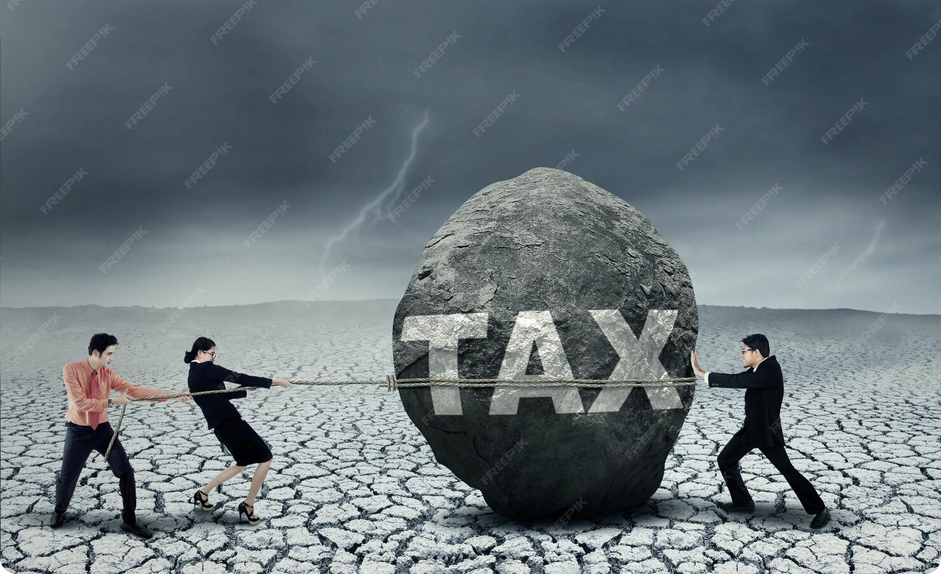
Introduction: The Fundamental Role of the State in Education
The foundational contract between a government and its citizens rests on the premise of the welfare state—the idea that the administration exists to facilitate the well-being of the populace, with education serving as the cornerstone of national progress. In a truly progressive society, the government functions as an enabler, removing barriers to entry for students and researchers to ensure that human capital is developed to its fullest potential. It is a widely accepted economic tenet that education is a “public good”; its benefits spill over to society at large, resulting in lower crime rates, better health outcomes, and robust economic growth.
However, a critical analysis of current fiscal policies reveals a disturbing contradiction. While the rhetoric of the government often emphasizes “Digital India,” “Skill India,” and becoming a “Vishwaguru” (World Teacher), the financial reality on the ground tells a different story. Instead of acting as a launchpad for student aspirations, the current tax regime and spending priorities appear to be acting as stumbling blocks. When a government views the pursuit of knowledge not as a sector to be subsidized, but as a revenue stream to be exploited, it risks dismantling the future of the nation.
This critique explores the disparity between the minimal public spending on education and the exorbitant taxation (GST) levied on educational tools, contrasting this with global standards and analyzing the long-term damage to India’s potential as a scientific superpower.
I. Global Benchmarks vs. Domestic Reality: The GDP Gap
To understand the gravity of the situation, one must look at the macroeconomic data. Education is not merely an expense; it is an investment with the highest possible return on equity for a nation.
The Nordic Model vs. The Indian Reality
Nations that lead the world in innovation and quality of life—such as Sweden, Finland, Germany, and Norway—have adopted a model where the state bears the financial burden of education. In these countries, tuition is often free, and the cost of educational materials is heavily subsidized. The logic is simple: a student should worry about calculus and literature, not about the cost of a notebook or a laptop. By removing financial anxiety, these nations ensure that merit, not wealth, dictates success.
The Indian Spending Deficit
In stark contrast, India’s public spending on education has historically been inadequate. Despite recommendations from the Kothari Commission (1966) and the National Education Policy (NEP) 2020 to increase education spending to 6% of the Gross Domestic Product (GDP), the reality is far bleaker. In recent years, government spending on education has stagnated, fluctuating between 2.8% and 3.1% of the GDP.
- India’s GDP: ~4 Trillion USD (Nominal).
- Education Spend: 2.9% of GDP.
For the world’s 4th largest economy (by some metrics approaching the 3rd in PPP), allocating such a meager percentage to the most vital sector is not just a policy failure; it is a strategic error. It suggests that while the economy grows, the mechanisms to distribute that growth into human capability are broken.
The Allocation of Public Funds: A Question of Priorities
The frustration of the common citizen is compounded when they witness where public money is being spent. While schools lack basic infrastructure and universities face funding cuts, we witness an increase in “non-productive” expenditure:
- Political Extravagance: Massive outlays for political rallies, event management for elections, and advertising budgets for government achievements.
- Legislative Luxury: Reports of Members of Legislative Assemblies (MLAs) and Members of Parliament (MPs) receiving expensive gifts—latest iPhones, MacBooks, and luxury allowances—funded by the taxpayer.
- The “Influencer” Budget: The recent trend of creating special budgets or awards for social media influencers suggests a pivot toward populism rather than intellectualism.
This juxtaposition creates a moral hazard. If the government can afford luxury gadgets for politicians who already enjoy significant perks, why must a poor student pay an exorbitant tax to buy a pen?
II. The Taxation of Basic Literacy: GST on Stationery
The Goods and Services Tax (GST) was introduced as a “One Nation, One Tax” reform, but for the education sector, it has arguably become a “Tax on Learning.” The classification of essential educational items under the 12% and 18% tax slabs is a regressive policy that disproportionately affects the poor.
The 18% Burden on Essentials
Consider the basic toolkit of a student. These are not luxury items; they are the tools of the trade for literacy. Yet, the tax regime treats them as commercial commodities.
- Exercise Books, Notebooks, and Registers: Taxed.
- Pens (Ballpoint, Fountain), Markers, and Highlighters: 18% GST.
- Mathematical Instruments (Geometry boxes): 18% GST.
- Paper Clips, Staplers, Sharpeners: 18% GST.
- Files, Folders, and Organizers: 18% GST.
The Impact on the Economically Vulnerable
To the policymaker sitting in an air-conditioned office, an 18% tax on a ₹ 10 pen might seem negligible. However, India is a country where a significant portion of the workforce operates in the unorganized sector.
Consider a daily wage earner or a laborer:
- Daily Income: ₹ 300 – ₹ 400.
- Monthly Income (assuming irregular work): ~₹ 8,000 – ~₹ 10,000.
For a family with two or three school-going children, the cumulative cost of stationery at the start of an academic year is a massive financial shock. When the government adds an 18% surcharge on top of inflation, it effectively taxes the aspiration of the poor to escape poverty.
- If a family spends ₹ 2,000 on yearly supplies, ~₹ 305 of that is purely tax. That ₹ 305 represents a full day’s hard labor for the parent.
By earning revenue from the pencils and paper of the poorest children, the state is engaging in a form of predatory taxation. These items should, by all ethical and economic standards, be zero-rated (0% tax).
III. The Digital Barrier: Taxing the Future (Electronics & Computing)
The 21st century belongs to the digital economy. The definition of “literacy” has evolved from reading and writing to coding and digital proficiency. However, the taxation policy on computer hardware directly contradicts the government’s own vision of a “Digital India.”
The 18% Wall on Hardware
Higher education, particularly in STEM (Science, Technology, Engineering, and Mathematics), requires access to computing power. Yet, the GST rates on these essential tools remain prohibitively high:
- Laptops and Desktops: 18% GST.
- Monitors (up to 32 inches): 18% GST.
- Printers and Scanners: 18% GST.
- Peripherals (Keyboards, Mice, Webcams): 18% GST.
This 18% levy acts as a gatekeeper. It ensures that digital fluency remains a privilege of the upper-middle class, widening the “Digital Divide.”
Strangling the Research Community (The DIY & Hardware Crisis)
The situation becomes even more critical when we look at component-level taxation. For a nation to become a superpower in Artificial Intelligence (AI) and chip design, it needs a culture of “makers”—students who build their own PCs, researchers who set up home servers, and startups that prototype hardware.
Current GST rates on components:
- Processors (CPUs): 18%
- Motherboards: 18%
- RAM (Memory Modules): 18%
- Hard Drives and SSDs: 18%
- Graphics Cards (GPUs): 18%
The Consequence: India as a Permanent Consumer
Why is this dangerous? Because high taxes on components discourage experimentation.
- If a student wants to build a deep learning rig to study AI, the GPU alone might cost ₹ 50,000. The government takes ~₹ 9,000 of that as tax.
- When research equipment is taxed as a luxury, innovation slows down.
This policy signals that the government is content with India remaining a consumer market. We are encouraged to buy phones and laptops (contributing to foreign companies’ profits), but we are penalized if we try to buy the parts to understand how they work or to build something new.
- We want to compete with NVIDIA, Google, Microsoft, and Apple.
- But we tax the very tools (chips, boards, sensors) required to create the next NVIDIA.
Unless these taxes are rationalized, India will never transition from a “Service Economy” (maintenance and support) to a “Product Economy” (invention and creation). We will remain dependent on foreign chips and foreign IP (Intellectual Property).
IV. The Telecom Tax: Taxing the Nervous System of the Economy
The internet is no longer an entertainment medium; it is the nervous system of the modern economy and the primary delivery mechanism for education.
- Online Classes: From Zoom to Coursera.
- Research: Accessing IEEE papers, GitHub repositories, and global data.
- Work: The gig economy and freelance work.
Despite this, the telecom sector is heavily burdened. Internet usage and mobile recharges attract 18% GST.
The Monopoly/Duopoly Problem
The telecom sector in India has consolidated into a near-duopoly. While the government may struggle to control private pricing strategies, it has full control over the tax component.
- Taxing internet access at 18% is akin to taxing electricity or water at luxury rates.
- A reduction to 5% or 10% would immediately lower costs for millions of students and researchers who rely on data for their daily work.
In an era where “data is the new oil,” taxing data access is effectively taxing the fuel required for economic acceleration.
V. Misplaced Priorities: Influencers vs. Scientists
Perhaps the most heartbreaking aspect of the current scenario is the cultural and fiscal shift regarding who the state chooses to reward.
The Rise of the “Influencer Economy”
We are witnessing a trend where state governments and central ministries are setting aside special budgets to court social media influencers. Awards ceremonies, collaborations, and paid promotions are becoming common.
- The Political Motivation: Influencers command the attention of the youth demographic. They are potent tools for winning elections and shaping narratives. They are the new media, and unlike traditional journalists who might ask tough questions, invited influencers often serve as echo chambers for the ruling establishment.
The Neglect of the Scientist
Contrast this with the treatment of researchers:
- Fellowship Delays: PhD scholars across India frequently protest about delays in receiving their monthly stipends (JRF/SRF).
- Lack of Equipment: Laboratories in state universities are often decades behind in technology.
- Bureaucratic Hurdles: Procuring a simple chemical or sensor involves layers of red tape and, as mentioned, high taxes.
The message sent to the youth is clear: If you want recognition and money, dance on a reel or make a vlog. If you study hard, do research, and try to cure cancer or invent a new material, you will struggle for funding and pay high taxes.
This is the recipe for civilizational decline. A nation that glorifies entertainment over intellect will eventually find itself subservient to nations that prioritize science.
VI. Human Capital Flight (Brain Drain)
The direct consequence of the “High Tax, Low Support” model is the exodus of India’s brightest minds. This phenomenon, often called “Brain Drain,” is actually “Brain Push.”
Our scientists and engineers do not want to leave their homeland. They are forced to leave because:
- Infrastructure: A lab in the US or Europe provides access to the latest machinery without the researcher having to pay out of pocket or wait months for tender approvals.
- Standard of Living: The tax they pay abroad translates into tangible benefits (free schools for their kids, healthcare, clean air). In India, they pay high direct and indirect taxes (GST) but receive little in return.
- Respect: Abroad, a PhD is a pathway to a middle-to-upper-class life. In India, without family wealth, a researcher struggles to afford a house or a car due to the cost of living and taxation.
If we want Apple or Google to be Indian companies, we need the talent that is currently running Apple and Google in the USA to stay in India. That requires an ecosystem of support, not a web of taxes.
VII. The Corporate Tax Disparity: A Regressive Anomaly
Finally, we must address the glaring inequality between the taxation of corporations and the taxation of students.
The Corporate Tax Structure
To attract foreign investment and boost manufacturing, the government has slashed corporate tax rates.
- New Manufacturing Companies: ~15% (Effective rate 17.16%).
- Existing Domestic Companies: ~ 22% (Effective rate ~ 25.17%).
The Comparison
- A multi-billion-dollar corporation pays 15% tax on its profits.
- A struggling student pays 18% tax to buy a geometry box or a laptop battery.
This is a distortion of fiscal justice. While low corporate taxes are defended as a way to create jobs, the high tax on education destroys the employability of the workforce that is supposed to fill those jobs. We are incentivizing the building of factories but penalizing the building of the minds that will work in them.
We are approaching a dystopian reality where the citizens—through consumption taxes like GST—contribute a higher share of the national revenue than the massive corporate entities. This shifts the burden of nation-building onto the shoulders of the poor and the middle class, specifically targeting their efforts to educate themselves.
VIII. Conclusion: The Path Forward
The current trajectory is unsustainable. A 4-trillion-dollar economy cannot sustain itself on the back of an uneducated or semi-skilled workforce. The government’s view of education as a “service to be taxed” rather than a “capacity to be built” is a fundamental flaw in governance.
Necessary Reforms
To reverse the damage and truly make India a global superpower, the following steps are urgent:
- Zero-Rating for Education: Complete removal of GST on all stationery items (pens, paper, books).
- Tech-for-Ed Exemption: Reduction of GST to 5% on laptops, tablets, and computer components for verified students and educational institutions.
- R&D Incentives: Customs duty and GST waivers for research equipment imported or purchased by universities.
- Spending Hike: Immediate increase of education spending to at least 5% of GDP, funded by cutting wasteful political expenditures.
- Valuing Science: A cultural shift where researchers are celebrated and funded with the same enthusiasm currently reserved for social media influencers and political rallies.
Final Thought
If we continue to invest in vote-bank politics and influencer culture while taxing the tools of knowledge, we will remain a colony in the digital age—a market for the world to sell to, rather than a creator for the world to admire. The future belongs to nations that learn, not just nations that consume. It is time for the government to stop earning from the poor’s struggle to learn and start investing in their potential to lead. The choice is between a “Vishwaguru” (World Teacher) and a “Vishwa-Consumer” (World Consumer). The tax policy will decide which one we become.
 Views Today :
  Views Yesterday : 1
 Total views : 1798
Leave a Reply