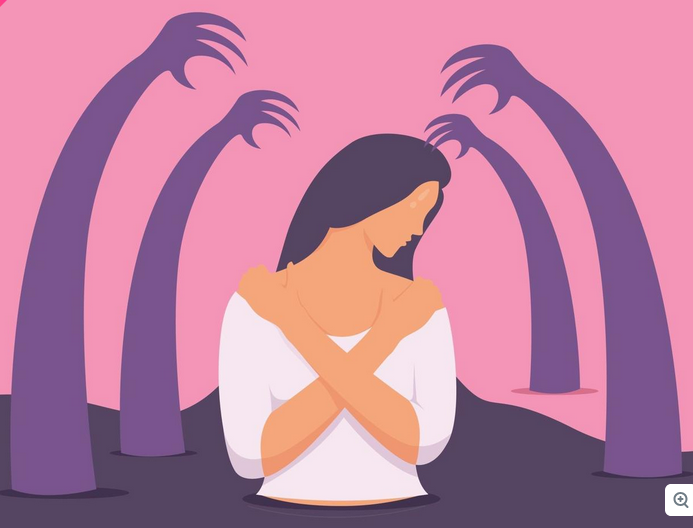
“Beti Padhao, Beti Bachao” as a Voting Slogan, Not a Moral Commitment
India proudly claims ancient wisdom, spiritual depth, and moral superiority. We repeatedly tell ourselves—and the world—that ours is a civilisation that worships women as goddesses, that reveres motherhood, that believes “where women are respected, gods reside.” We celebrate slogans like Beti Padhao, Beti Bachao with massive publicity campaigns, hoardings, speeches, and election promises.
And yet, the lived reality tells a very different story.
Women—Indian and foreign alike—are not safe in India. Not in cities, not in villages, not in tourist destinations, not in public transport, not even in educational institutions. Vulgar comments, stalking, harassment, groping, and sexual violence have become so common that they are often dismissed as “normal,” “inevitable,” or “part of society.”
Foreign governments routinely issue advisories warning women about travelling to India. Some explicitly discourage travel altogether, not to one or two places, but to the country as a whole. This is not propaganda. This is not conspiracy. This is how the world now sees us.
And instead of feeling ashamed, instead of asking hard questions, we become defensive. We accuse critics of “defaming India.” We shout “anti-national.” We hide behind culture, tradition, and nationalism.
But nationalism cannot erase reality.
Rape cases emerge every few years that shake the nation—brutal, horrifying, impossible to ignore. Candle marches are organised. Television debates explode. Politicians scream at each other. Committees are formed. Promises are made.
And then—slowly, predictably—everything goes silent.
The victim is forgotten. The system resets. The cycle repeats.
So the real question is not why individual crimes happen, but why the system keeps producing them.
Why has Indian society become increasingly unsafe for women?
Why is sexual aggression so casually expressed?
Why is accountability so rare?
Why does power protect predators?
And why do slogans replace action?
1. Normalisation of Vulgarity and Violence Through Cinema and Entertainment
One of the most uncomfortable truths we refuse to confront is the role of Indian cinema and entertainment in shaping male attitudes toward women.
This is not a new problem.
From the 1970s, 80s, and 90s onward, mainstream Indian films routinely included rape scenes, attempted rape scenes, stalking portrayed as romance, and aggressive pursuit glorified as masculinity. These scenes were not subtle. They were violent, graphic, and often unnecessary to the story.
What makes this even more disturbing is how these films were consumed.
In that era, watching movies was often a community activity. Entire families watched together. In many villages, a single television served dozens of people—men, women, children—all exposed to the same content. Children grew up watching women being assaulted on screen as “entertainment.”
What does that do to a developing mind?
When violence against women is repeatedly shown without consequence, without moral condemnation, without justice, it stops feeling abnormal. It becomes familiar. It becomes acceptable. It becomes internalised.
Those children grew up.
They became adults.
They carried those images into their youth.
Today’s cinema has not corrected this legacy—it has intensified it.
Item numbers, sexually explicit lyrics, voyeuristic camera angles, aggressive masculinity, and casual misogyny dominate mainstream films across languages. Women are reduced to body parts. Desire is shown as entitlement. Consent is blurred or ignored.
Regional industries, including Bhojpuri cinema, have pushed these boundaries even further, often crossing into near-soft-porn territory that is publicly accessible, aggressively marketed, and consumed across age groups.
The defence is always the same:
“People watch it, so we make it.”
This is a lie.
People watch what is available. Content shapes demand as much as demand shapes content. If filmmakers stopped using rape, vulgarity, and objectification as selling tools, audiences would adapt. Taste is not fixed; it is trained.
But money matters more than morality.
Actors, producers, and platforms chase profit, not responsibility. Web series openly portray sexual violence with minimal regulation. Censorship collapses. Oversight disappears.
And then, when a real-life rape occurs, the same industry expresses “shock” and “grief.”
This is hypocrisy.
You cannot normalise sexual violence in fiction and pretend to be innocent when it appears in reality.
2. Political Power as a Shield for Sexual Crimes
Perhaps the most dangerous signal a society can send is this:
If you are powerful enough, the law does not apply to you.
India has sent this message repeatedly.
Time and again, political leaders, party workers, and individuals close to power have been accused of rape, sexual assault, kidnapping, and murder. In many cases, evidence is strong. Victims speak out. Families protest.
And yet:
- Accused leaders are protected.
- Investigations are delayed.
- Witnesses are threatened.
- Cases are diluted.
- Media narratives are manipulated.
Why?
Because admitting guilt damages political image. Because power fears accountability. Because parties prioritise survival over justice.
When victims are brave enough to persist, they are harassed, shamed, or silenced. Some are driven to desperation—self-harm, public protests, even suicide—just to make their voices heard.
And still, justice crawls.
The most horrifying message this sends to society is not just to women, but to men:
“If you align with power, you can get away with anything.”
Party workers know this.
Local strongmen know this.
Influential families know this.
Sexual violence becomes not just a crime, but a demonstration of dominance.
And when leaders themselves embody this behaviour, what example do they set?
Leaders are supposed to be role models.
Instead, they become proof that morality is optional.
3. Compromised Policing, Judiciary, and Media
A functioning democracy depends on three pillars:
- Police
- Judiciary
- Media
In cases of violence against women, all three frequently fail.
Policing
Many police officers treat victims with suspicion rather than empathy. FIRs are delayed or refused. Victims are blamed for their clothing, behaviour, or presence in public spaces. Evidence is mishandled or destroyed.
Only a small fraction of officers act with integrity—and those who do often face pressure, transfers, or threats.
Judiciary
Judges are human, and humans are vulnerable—to power, money, fear, and influence. While some judges are courageous and fair, many cases drag on for years. Justice delayed becomes justice denied.
When influential accused receive bail, parole, or special treatment, public trust collapses.
Media
Media houses increasingly act as political extensions rather than watchdogs. Cases involving those close to power are buried or softened. Opposition-linked cases are sensationalised.
The narrative is controlled.
The truth is filtered.
Public outrage is managed.
Together, these failures create an ecosystem where sexual violence is not feared—because punishment is uncertain.
4. Caste, Power, and Sexual Violence
Caste remains one of the most brutal and unspoken realities of Indian society.
For centuries, upper-caste dominance has included not just economic and social control, but sexual exploitation of lower-caste women. This is not history—it is ongoing reality.
Lower-caste and tribal women are disproportionately targeted because perpetrators know:
- Families lack power.
- Communities lack protection.
- Justice is unlikely.
Threats, intimidation, and violence silence victims. Entire villages collude in silence. Cases disappear.
When justice does occur, it is treated as an exception, not a rule.
A society that allows caste-based sexual violence to persist has already abandoned its moral foundation.
5. Absence of Sex Education, Moral Education, and Gender Sensitivity
India treats sex education as taboo, shameful, and corrupting. The result is not purity—it is ignorance.
Children grow up without understanding:
- Consent
- Respect
- Boundaries
- Emotional intelligence
- Gender equality
Instead, they learn about sex through:
- Pornography
- Vulgar cinema
- Peer misinformation
- Social media
This creates confusion, entitlement, and aggression.
Schools rarely teach respect for women as a lived value. Religion is cited, scriptures are quoted, but practice is absent.
We boast of ancient texts while ignoring modern responsibility.
If education systems fail to produce humane men, then the system itself is broken.
“Beti Bachao” — From Whom?
This is the most painful question.
From strangers?
From neighbours?
From classmates?
From teachers?
From police?
From politicians?
From the system itself?
If women are unsafe everywhere, then slogans are meaningless.
A society that cannot protect its women has no moral authority to call itself great, spiritual, or civilised.
Final Truth
Sexual violence in India is not an accident.
It is not random.
It is not inevitable.
It is produced—by culture, power, silence, and impunity.
Until we confront this honestly, without defensiveness or denial, nothing will change.
Slogans will continue.
Crimes will continue.
And shame will deepen.
 Views Today :
  Views Yesterday : 1
 Total views : 1798
Leave a Reply